
Specs and Details
Hemp Building Specs & Details
How It All Comes Together
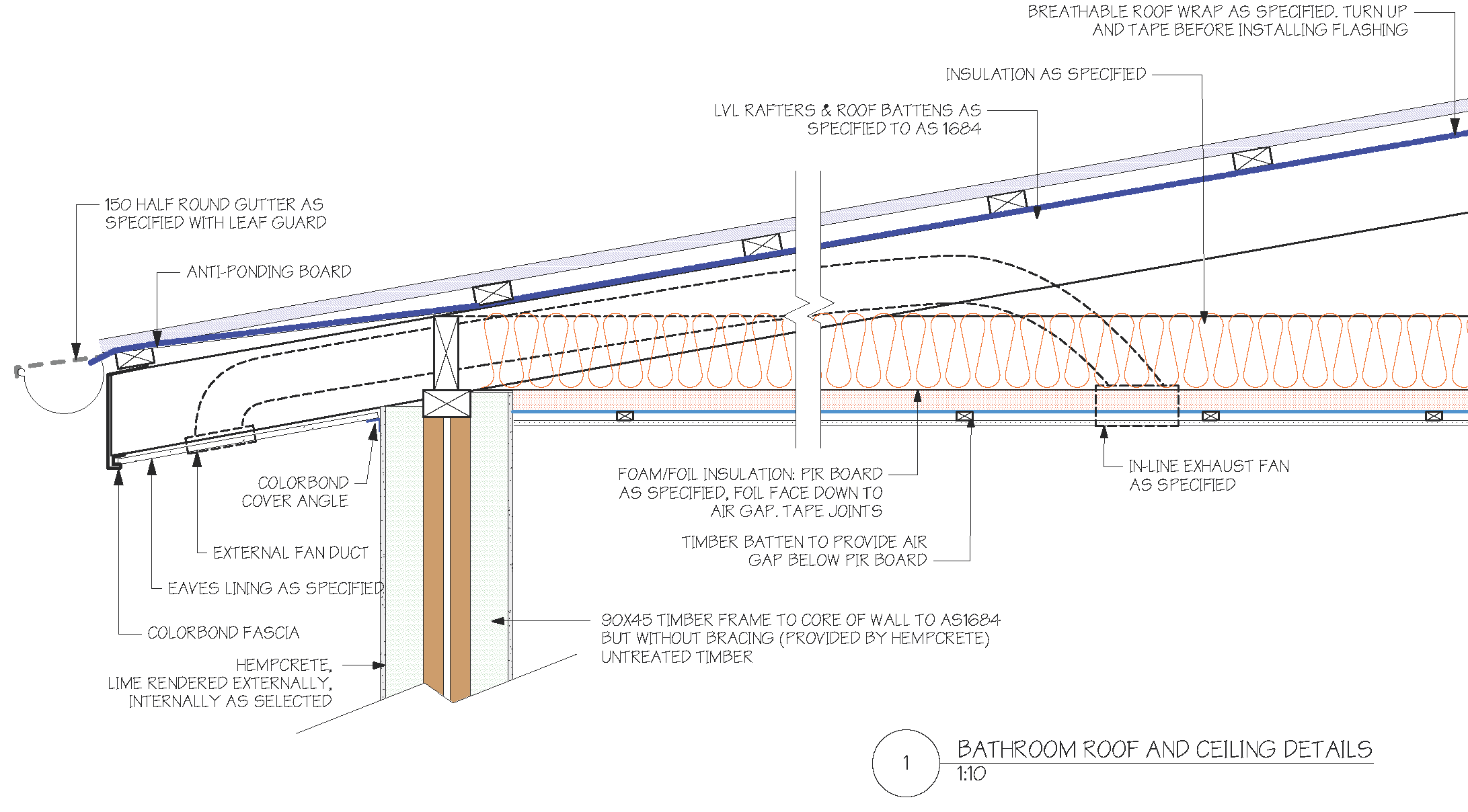
In many ways, a hempcrete home is built just like any other in Australia—typically a timber stick frame on standard footings or a concrete slab, with a conventional roof structure overhead. But while the bones of the build are familiar, there are some key details that set hempcrete apart.
From wall thickness and drying times to breathable finishes and passive design principles, the success of your hemp build relies on getting these elements right from the start. That’s where we come in.
Every project is unique, and we’re here to make sure yours runs smoothly from concept to completion. Get in touch to talk through your plans—we’re happy to offer insights and guidance tailored to your site, design, and goals.
Understanding Hemp Masonry (hempcrete)
See Your Home – yourhome.gov.au – for more info
Understanding hemp masonry
Hemp masonry (also known as hempcrete, or hemp-lime composite) is a composite material made of hemp hurd – the inner woody part of the industrial hemp plant’s stem – lime binder and water. Sand can be added to minimise the use of lime binder and to provide a little thermal mass.
Although hemp masonry has recently become popular in the construction of homes with low environmental impact and good thermal performance, it has been used as a building material for at least 300 years. Hemp has also been used for fabric, ropes, and food for thousands of years. The industrial hemp plant used for these applications contains virtually none of the drug THC that is associated with marijuana.
As a building material, hemp masonry offers ecological and economic benefits from beginning to end: for the farmer, the processor, the builder, and the building occupant. Hemp masonry provides very good insulation at the same time as being highly vapour permeable, which makes for very comfortable buildings with good indoor air quality.